

The government of Canada has announced a plan to extend funding for the Inuit Child First Initiative. In response, Education Minister Caitlin Cleveland said that it is a positive sign.
The minister added that it remains unclear whether the guidelines for Inuit Child First or Jordan’s Principle have changed in a way that allows children and families to better access services in the N.W.T.
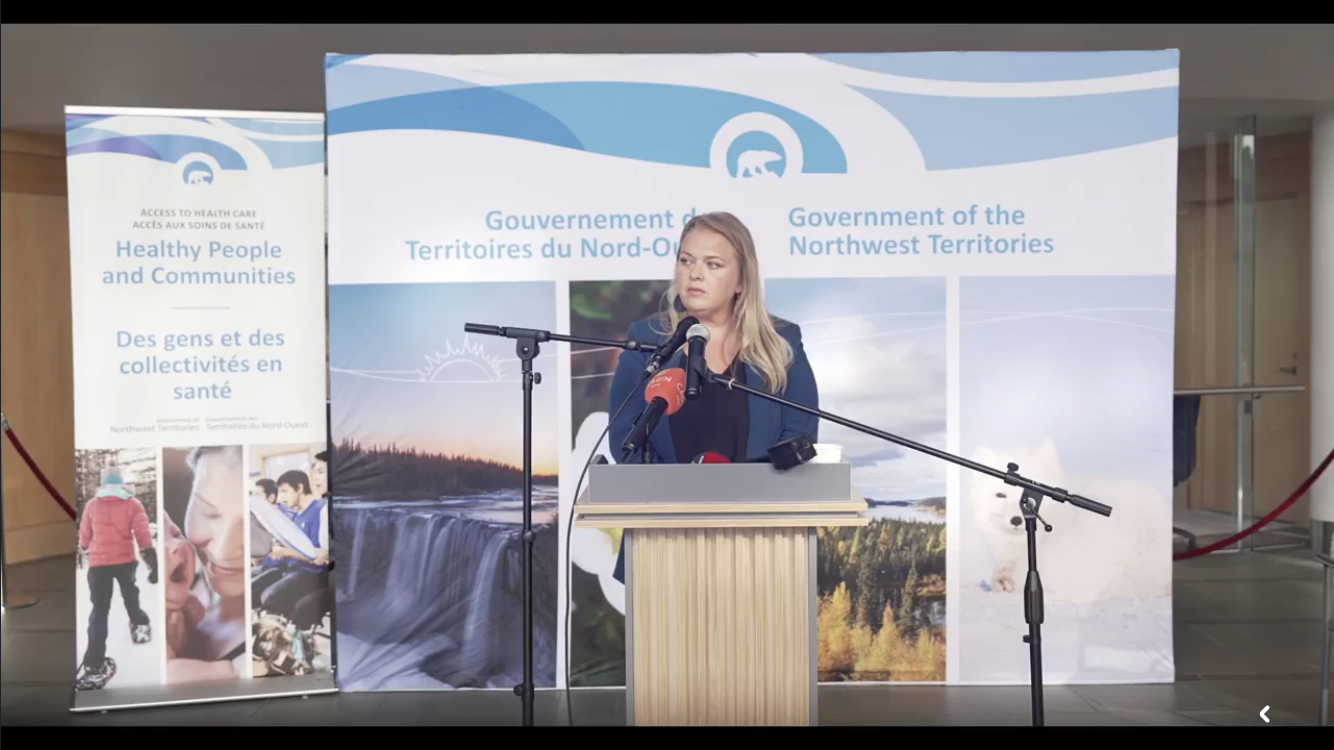
“Yesterday’s announcement from the Government of Canada extending funding for the Inuit Child First Initiative is a welcome signal that the federal government understands how important these supports are for Inuit children and families. Any extension that brings greater certainty in the short term is better than leaving families, educators, and service providers in limbo, and I appreciate the recognition that these programs matter,” said Cleveland.
Cleveland and other GNWT leaders have been pressuring the federal government for more long term funding.
In the fall, the GNWT added an interim support assistants funding of up to $14 million for classrooms supports.
Since 2018, education bodies in the GNWT have accessed over $211 million dollars through Jordan’s Principle and the Inuit Child First Initiative, Cleveland reported in September.
Leaders across the territory have been urging the federal government to reconsider the changes to the program since the changes were made, about one year ago in February 2025.
In the fall, Cleveland emphasized that the GNWT’s move to fund the initiative was “temporary” and done out of critical need. The minister called on the federal government to come to the table to provide the funding needed for the education assistants.
“Through the Support Assistants Initiative, we’re stepping in to protect student supports—but territorial resources are limited. The Government of Canada must commit to a sustainable, regionally appropriate solution that reflects the realities of Northern education. Jordan’s Principle isn’t supplemental in the North—it’s essential. The recent changes have left schools in limbo and students at risk of losing vital help. We’ll continue to stand with Indigenous governments, families, and communities to ensure every child has the support they deserve,” said Cleveland.
Indigenous Services Minister Mandy Gull-Masty, said that addressing changes with Jordan’s Principle funding and the application process was a complicated issue and a critical one.
Having engaged closely with the family of Jordan River Anderson about the legacy of their son’s mark for Indigenous children in Canada, the minister explained it’s important to find the balance between the needs, wants, desires of what the community is trying to do.
“And really uphold and honour that legacy is something that’s very important to me as a minister. I’ve had a lot of community engagements, I’ve had a lot of dialogue with Chief and councils even with Service delivery providers asking them, what can we do to ensure that we bring this program back to what it is truly intended to do, which is to help those children that are falling in the Gap along the way this program has evolved,” said Gull-Masty in an interview broadcast by APTN on Aug. 21.
“It has taken different shapes, but really trying to refine it and have it truly reflect what that legacy is meant to be is the direction that we’re going to be going with this critical file,” added Gully-Masty.
Cindy Blackstock, First Nations Children and Family Caregiving Executive Director, also called for a new approach to how the Jordan’s Principle program is applied, particularly federally funded services for First Nations children.
“Canada does not have a reliable National strategy or funding mechanism on mental health that really is catered towards the specific and distinct needs of children and families. So, many children are receiving, literally, life-saving, and life-changing supports to be able to access mental health through Jordan’s Principle.”