

Schools across the territories are preparing to open and some have already opened their doors, but nearly 100 education positions remain in limbo, without word as yet on secure funding.
Earlier this month, the territorial government heard that these education positions will potentially be cut back from the Jordan’s Principle funding program after over 80 suppport staff positions were denied earlier this year.
Shirley Zouboules, YK1’s Superintendent of Education, said teaching assistant applications through Jordan’s Principle funding program were received or have been escalated for review by Indigenous Services.
What will happen as students return back to classes and how will this affect the students and teachers?
According to the new criteria for Jordan’s Principal funding, the department of Education is generally responsible for meeting the needs of all students.
Jacinthe Goule, a representative with Indigenous Services Canada, explained that each request is reviewed on a case-by-case basis.
“Certain types of school-related requests will no longer be approved, unless required by substantive equality or linked to the specific health, social or educational need of the First Nations child. For example, to accommodate a child’s exceptionality-related needs (e.g., deafness, blindness, etc.) which cannot be accommodated within the provincial/territorial school system,”
The changes do not affect the eligibility of First Nations children under Jordan’s Principle, explained Goule. First Nations children, who are under the age of majority, in their province or territory of residence, can access Jordan’s Principle if registered or eligible to be registered under the Indian Act. The child is required to have one parent or guardian who is registered or eligible to be registered and is recognized by their nation for the purposes of Jordan’s Principle.
Goule said the changes are a result of new operational guidance and not a reduction in funding.
There are changes to the types of requests that will be approved, but the eligibility of who can apply for Jordan’s Principle and the Inuit Child First Initiative has not changed.
Pascal Laplante, a representative with Indigenous Services Canada, affirmed that each request under the program is considered on a case-by-case basis while taking into account the distinct needs of the Indigenous child and gaps in other programs or services.
“If a First Nations child has a specific health, social or educational need, or if it is required by substantive equality, the family can make a request to Jordan’s Principle,” explained Goule.
The goal of the Jordan’s Principle program is to ensure First Nations children are not denied access to essential services because of their identity as First Nations children.
Goule emphasized that it is not intended to substitute for services that are the responsibility of the provincial or territorial government.
In February, Canada changed operational procedures for the approval of products, services, and supports under Jordan’s Principle and the Inuit Child First Initiative.
Jordan’s Principle program funding basket includes $1.8 billion for the whole country, along with $121.7 million in funding this year for the Inuit Child First Initiative, said Goule.
Agata Gutkowska, Manager of Public Affairs and Communications at GNWT’s department of education says told True North FM that the Jordan’s Principle program provided $58.6M in funding to NWT schools for the 2024-2025 fiscal year.
Jordan’s Principle has grown at an “extremely fast” pace over the last few years.
“In 2021-2022 there were 614,350 approved products, services and supports, compared to almost 3 million approved products, services and supports in 2023-2024, a 367% increase. Jordan’s Principle makes sure that First Nations children have equal access to the essential government-funded health, social and educational products, services, and supports they need, regardless of where they live in Canada,” said Laplante.
The process for how Jordan’s Principle applications are received and approved is currently under review.
“Due to the significant increase in the numbers of requests, Indigenous Services Canada is implementing new ways to process requests. We are also reviewing our processes at regional and national levels to be more consistent and clearer on the required documentation and the services First Nations children can access through Jordan’s Principle,”
Jordan’s Principle makes sure that First Nations children have equal access to the essential government-funded health, social and educational products, services, and supports they need, regardless of where they live in the country
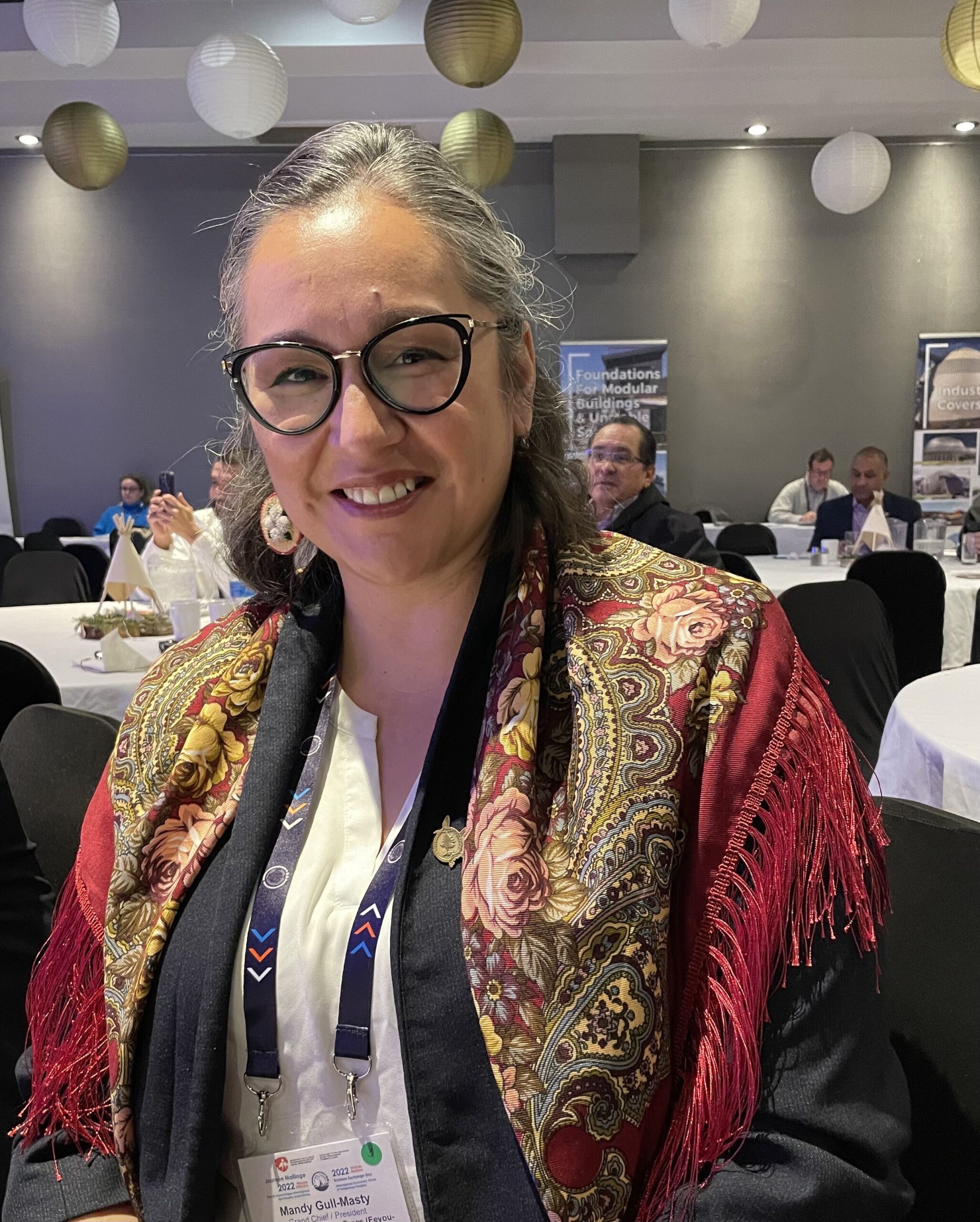
Minister Mandy Gull-Masty, who is the minister of Indigenous Service, says addressing what is going to happen with Jordan’s Principle funding continues to be a main concern.
Speaking with the family of Jordan River Anderson about the legacy of their son’s mark for Indigenous children in Canada, the minister says it’s important to find the balance between the needs, wants, desires of what the community is trying to do.
“And really uphold and honour that Legacy is something that’s very important to me as a minister. I’ve had a lot of community engagements, I’ve had a lot of dialogue with Chief and councils even with Service delivery providers asking them, what can we do to ensure that we bring this program back to what it is truly intended to do, which is to help those children that are falling in the Gap along the way this program has evolved,” said Minister Gull-Masty in an interview broadcast by APTN on Aug. 21.
“It has taken different shapes but really trying to refine it and have it truly reflect what that legacy is meant to be is the direction that we’re going to be going with this critical file,” said Minister Gully-Masty.
Cindy Blackstock, who is the executive director of First Nations Children and Family Caregiving, is also calling for a new approach to how Jordan’s Principle program is applied, particularly federally funded services for First Nations children.
The legacy of colonial violences, has created a health and wellness crisis for youth and their families.
“And the reason that there is such a huge mental health need relates to back to residential schools and a lot of the harms that flowed from that. So you got populations with higher need and less access particularly in a culturally based access,” Blackstock pointed out.
“Canada does not have a reliable national strategy or funding mechanism on mental health that really is catered towards the specific and distinct needs of children and families. So, many children are receiving, literally, life-saving, and life-changing supports to be able to access mental health through Jordan’s Principle.”