
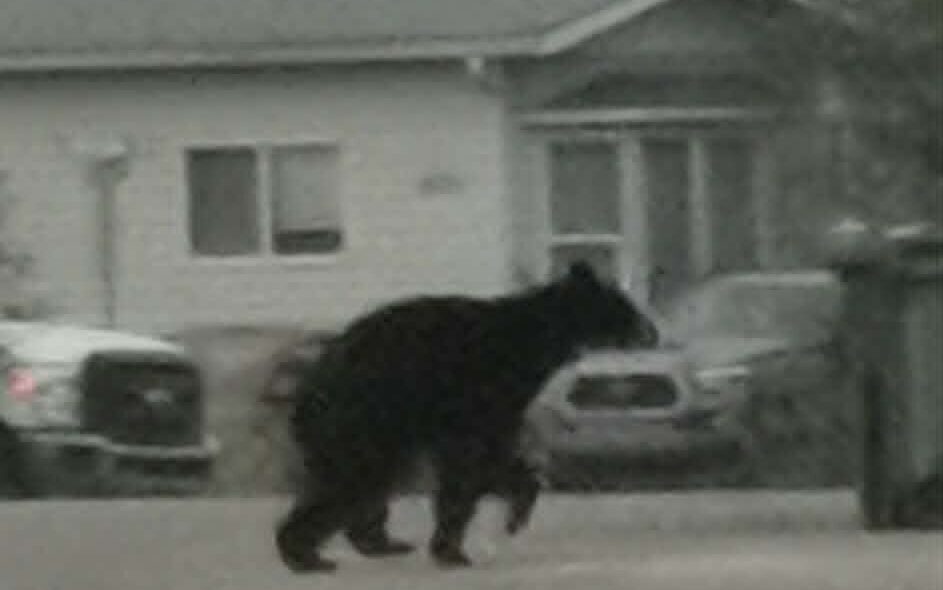

A black bear sighting in the Northlands neighbourhood of Yellowknife this weekend caught some area local residents off guard. It is unclear what caused the encounter, but experts advise that the public should keep food and food waste in airtight containers to prevent encounters, as bears have a keen sense of smell.
Daisy Mimay Siguenza was in her vehicle in the Norseman Drive area on Sunday when she spotted a black bear roaming around near homes in the subdivision.
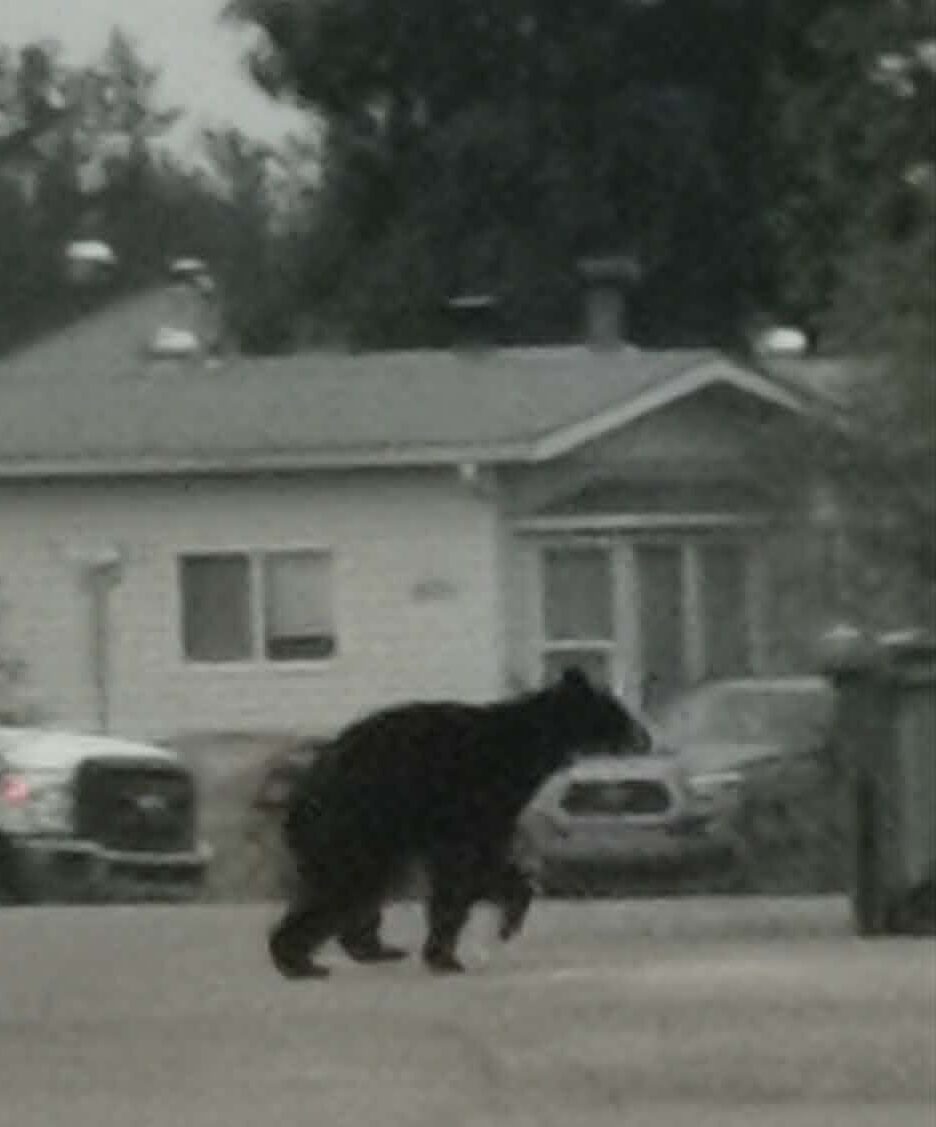
Witnesses reported the bear seemed to be scavenging.
“The bear was hopping from one house to another house. I think the bear was looking for food,” said Siguenza.
Wildlife officers and RCMP responded to the incident. They arrived on scene and walked around, letting people who live in the neighborhood know that a bear was roaming around.
A representative with the Environment department confirmed that the bear was captured.
“I have never seen a bear in town..and I was surprised and scared ..but the first thing that came to my mind is let my neighbourhood know that there is a bear roaming around so they get be aware and stay safe,” said Siguenza, who posted photos of the bear on facebook.
A wildlife expert with the territory said while it is common for bear sightings to happen in Yellowknife, the bear’s behaviour after being spotted by locals and wildlife officials is considered “uncommon.”
Julian Sabourin, a Renewable Resource Officer with the Environment department, reported wildlife officers euthanized the bear due to safety concerns.
Sabourin said after officers spotted the bear, they tried to use non-lethal deterrents and loud noises to encourage the bear to leave the area.
“The bear seemed not too concerned about the response from officers and was kind of showing a little bit of lack of fear of us and continued just to walk through the neighbourhood.”
“We continued to deter the bear and eventually we were successful in getting the bear out of the neighbourhood, which is what we wanted. We were able to push the bear towards a forested area. At this time officers continued to pursue the bear to continue deterring it,” added Sabourin.
Wildlife officers reported that while they were able to get the bear away from the immediate area, they were not able to effectively “scare” the bear off. The bear reportedly continued to show a “lack of fear” of the responding officers
Sabourin said that due to uncertainty of where the bear would potentially head to next, they decided that the bear had to be euthanized.
“We didn’t want it to go to another residential neighborhood and the fact that it had wasn’t too concerned about being close to town — deterrence efforts from Wildlife officers (didn’t work) and there was a decision made to dispatch the bear as a last resort to protect the public safety.”
Sabourin explained that the decision to kill a bear is a difficult one.
“Sightings of bears around Yellowknife are not very uncommon, however, when bears actually do end up right in residential parts of neighbourhoods, that is where it requires a bit more of an additional response from Wildlife officers.”
In case of an encounter, the public has been advised to stay calm, keep a distance, back away and give bears lots of room to make their exit.
Sabourin also advised that sightings can be reported to the local wildlife emergency line (the North Slave Wildlife line at 867-446-2073).
Sabourin said the bear could have been just wandering through a green space on the outskirts of the city and then ended up wandering into town.
Sabourin added that bears have a “very, very keen” sense of smell, so the bear may have been drawn by the smell of food or food waste.
While it is not uncommon for bears to be around the outskirts of Yellowknife, seeing bears walking around in subdivisions or in the city is not considered common.

“A lot of times they avoid people. They avoid actually coming right into our residential areas in Yellowknife. It’s just a really small percentage of times where they do, for whatever reason, be a bit more comfortable around our neighborhoods or populated areas.”
Sabourin explained it is important to manage attractants to help prevent bear encounters.
One way to do that is keep garbage in air tight bins and not put out to the curb utill the day of pickup.
“Things like recyclables, dog food, even things like recycled cans in your backyard, making sure that those are secured are important,” added Sabourin.
“Bears have a very, very strong team sense of smell. So, we just want to make sure that all of us in the North are making sure that we’re doing our part to manage our attractants to kind of avoid bears following their nose and coming and kind of investigating some of our more residential areas in Yellowknife.”