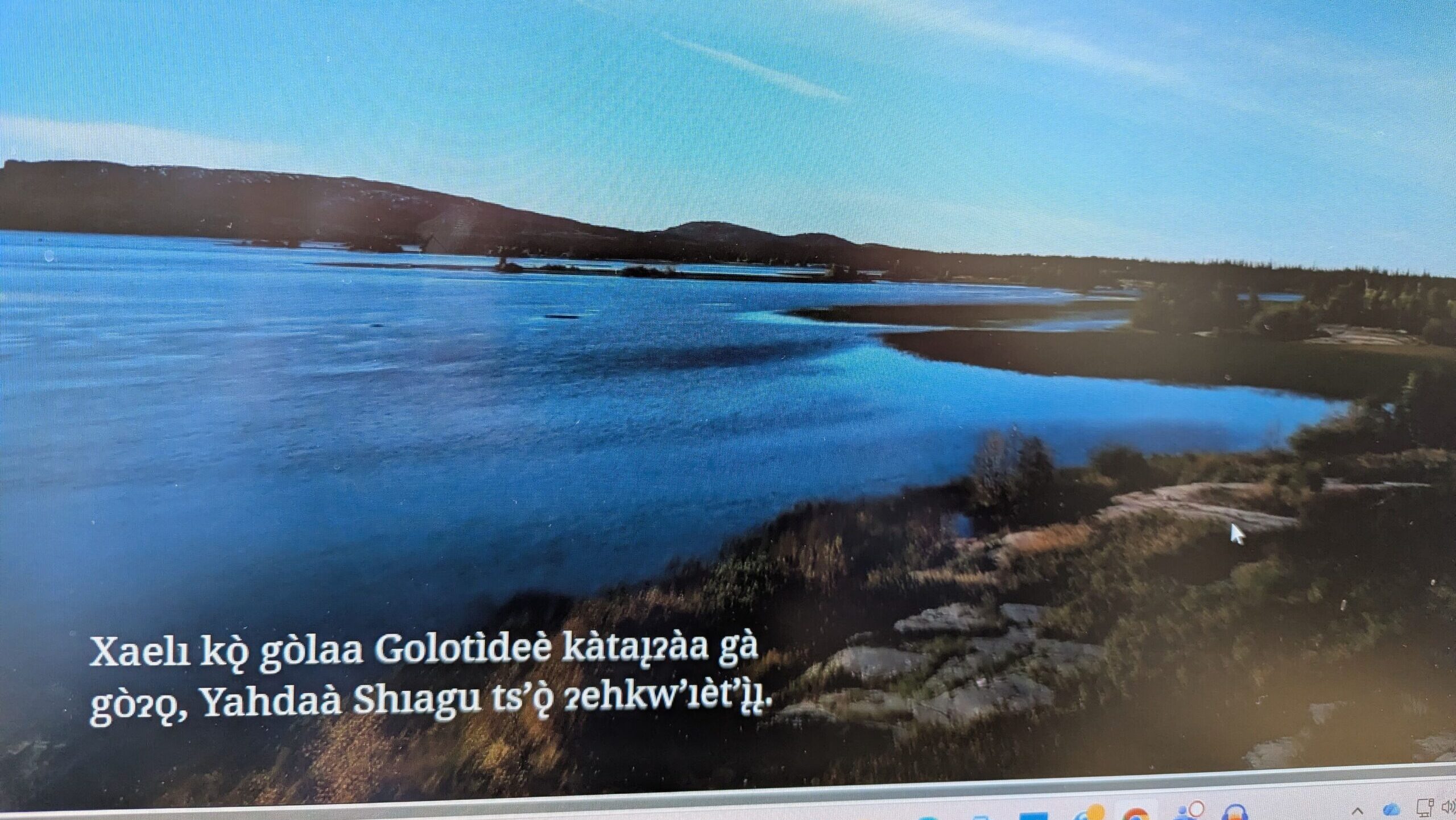

While in-person On the Land learning continues to be central to Tłı̨chǫ language revitalization, the Tłı̨chǫ language division is looking at ways to engage with youth through new immersive platforms, like virtual spaces, that honour history and traditions.
Danielle Dacanay with the Tłı̨chǫ Government’s Language Division emphasized that virtual resources are supplements to learning the language in the traditional way, they are not a replacement for it.
“Both Statistics Canada, and our internal survey that we ran in 2024 would suggest that only a fairly small proportion of youth, that is to say, below the age of 30, but particularly below the age of 25 are fluent or proficient in the language,” said Dacanay.
Dacanay said it’s important to address the fact that Tłı̨chǫ language material doesn’t exist in great quantities on the internet and in broadcast spaces.
“If the youths are already in digital settings anyway, the youths are already spending the majority of their free time and their social time in some way in a digital space then in order for those youth to learn Tłı̨chǫ we need to make Tłı̨chǫ available in that digital space,” said Dacanay. “(It’s a way of) attempting to remedy the fact that young people are spending a lot of time in in digital and broadcast spaces and those digital and broadcast spaces, don’t have Tłı̨chǫ in them in the same way that in-person spaces and communities necessarily do.”
Dacanay explained that having language materials in the home is a critical strategy to strengthen and revitalize the language.
The kits contain language materials for learners of all ages including children, adolescents or adults at all levels of proficiency in the language.
“This program is very much still in the process of development, but the intention is that we can provide community members, families with freely available accessible and usable Tłı̨chǫ materials if they want to use the traditional language in their home. One of the main issues that we’ve heard from people who want to learn Tłı̨chǫ but don’t or can’t is that they don’t really have access to the central language in their home because they don’t personally live with anybody who can speak to Tłı̨chǫ,” said Dacanay.
The materials in the kits carry the traditional language and culture passed through Elders and Language Keepers, drawing from an archival collection. These are being made accessible online, explained Dacanay.
“That collection is kind of the source from which we derive these language materials and then of course we modify them to make them more accessible. We modify them to make them more relevant to specific types of language situations — levels of proficiency, the number of fluid speakers at any given household,” said Dacanay.
Dacanay is a general linguists whose official title with the Tłı̨chǫ Language Division is Dictionary Keeper.
Dacanay said an online dictionary has been in construction for the past two years
“It’s an online dictionary of Tłı̨chǫ Yatıì. It’s got about 12,000 words about six to seven thousand example sentences and around five thousand pieces of audio associated with these entries. It’s a major source online for Tłı̨chǫ materials and at the moment. With the language kits and home project, is very much ongoing in terms of its development that has been the de facto hub for for the novel central language material to be published online for the materials to be made available online.”
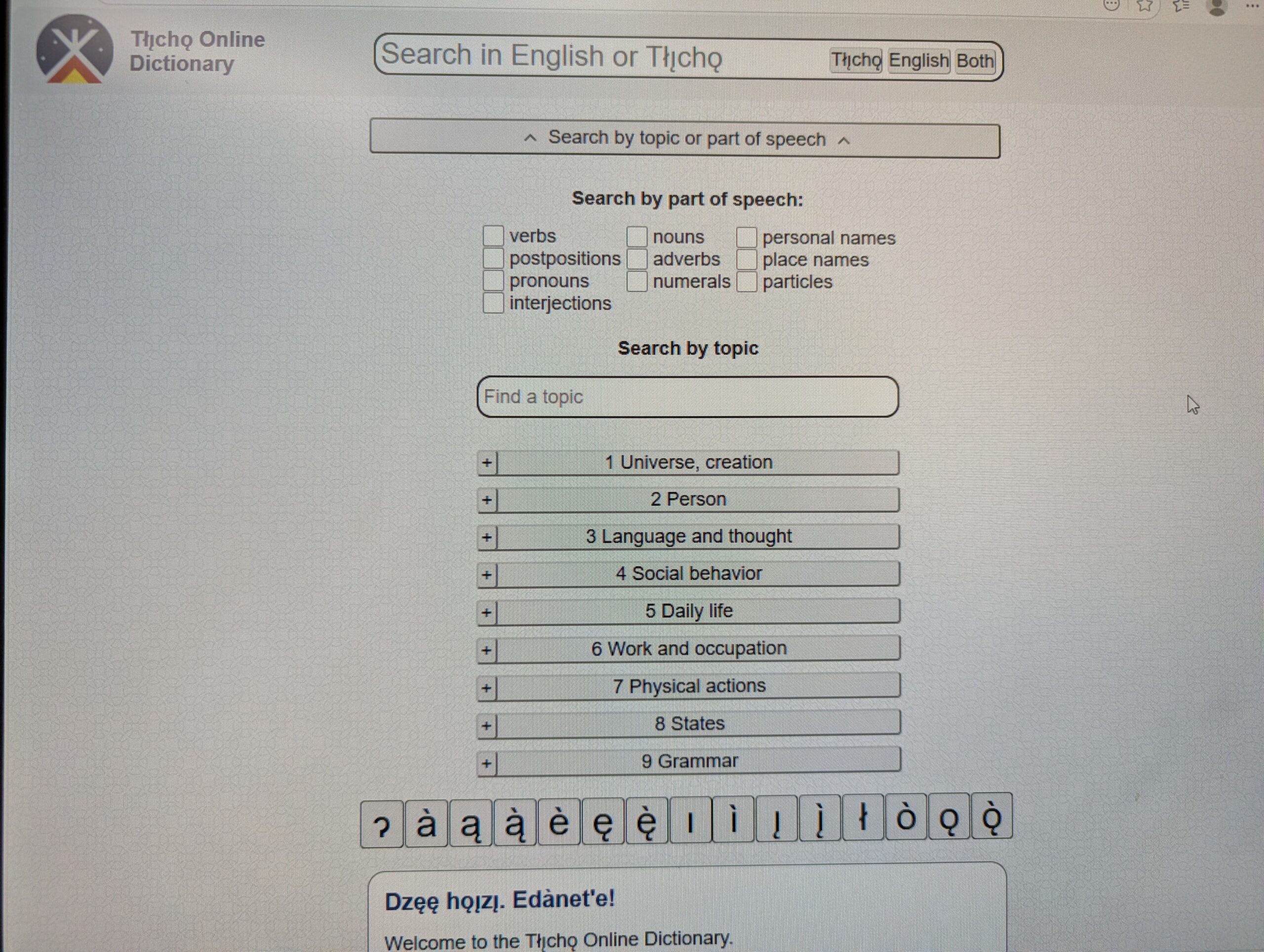
Putting together sets of physical language materials is labour intensive and resource intensive. Each time the department receives new Tłı̨chǫ language material, they add the novel material into the dictionary so it can be looked up and searched, explained Dacanay
Another virtual space of language immersion is the Tłı̨chǫ Virtual Trail.
“It is a really wonderful set of stories and explanations and encyclopedic entries that go over the entire trail from Behchokǫ̀ to Whatì. It is available in English and Tłı̨chǫ [and French]. There’s a ton of audio visual material,” said Dacanay.
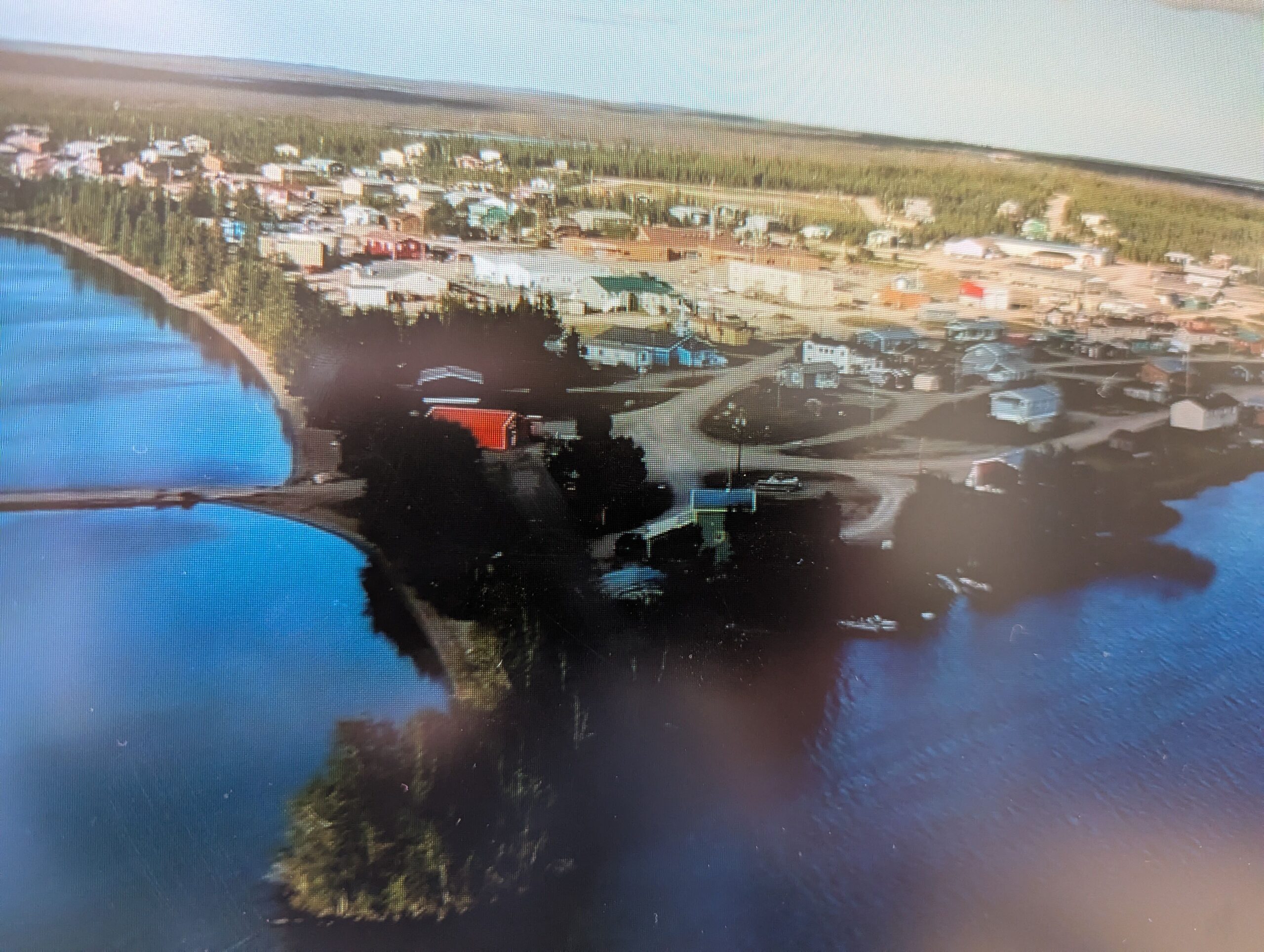
Youth in Whatì are working on a large project called Tłı̨chǫ Worlds: A Virtual Reality Hub for Cultural Preservation and Youth Empowerment.
The virtual space is being designed to open up immersive VR spaces for youth to learn language, traditions, and land-based skills.
These include virtual hunting expeditions with Elders, traditional ceremonies and experiencing historical events firsthand.
“Tłı̨chǫ Worlds combines culture and technology, empowering young people with the tools and training to create their own VR experiences, rooted in their heritage, while building skills for the digital future,” said organizers.
The project was nominated for an Arctic Inspiration prize in 2025
Dacanay explained that virtual language materials are meant to be accessible anywhere at any time
“These resources, they are supplements to learning the language in the traditional way, they are not a replacement for it. So, having a dictionary, having language kits in your home having access to a virtual trail, all of this is meant to make it easier for you to learn the language,” said Dacanay. “They are not at all meant to be replacements for, for learning language in the traditional way, which is on the land.”