

The Government of the Northwest Territories’ proposed 2026-27 budget includes a financial plan focused on housing, infrastructure and economic resilience.
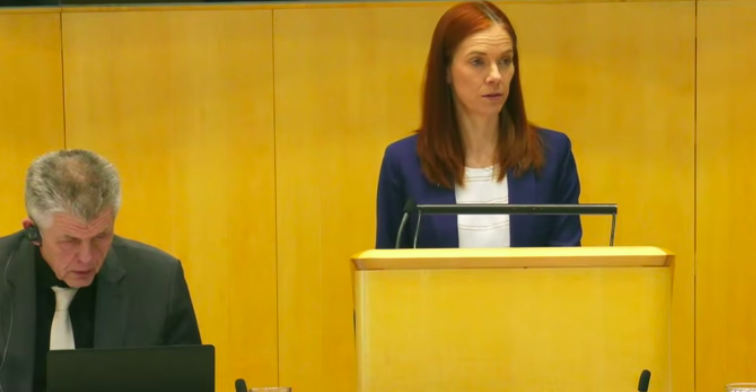
Finance Minister Caroline Wawzonek delivered the budget address at the Legislative Assembly on Thursday, for the proposed budget that includes a total spending of $2.724 billion.
Most of that funding is allocated to departmental operations, while $326 million is set aside for adjustments such as infrastructure contributions, deferred maintenance and the supplementary reserve. No new taxes are included in the budget, however, some fees and property mill rates will be indexed to inflation.
Territorial debt is projected to reach $2.21 billion by the end of March 2027, remaining within the $3.1-billion federal borrowing limit. The government says it is continuing to follow its fiscal responsibility policy, which aims to limit debt growth, support capital investment and maintain long-term affordability.
The budget also directs funding toward priorities of the Legislative Assembly, including housing, health services, community safety, reconciliation initiatives and economic development.
“For too long the North has been a fairytale for Canadian identity about snow and cold, dogsleds and aurora. Fairytales are not real. The true story of the North lies with its people, the people who live here and know the vastness of Canada’s northern landscape,” Wawzonek told the assembly in her opening remarks. “Meanwhile, as Northerners, we have been unable to overcome long-known economic challenges, including a historic lack of foundational infrastructure that contributes to high costs and holds back efficient construction of necessities like housing, networks of transportation and energy systems.”
She stated northern development has historically occurred in “sporadic” and “piecemeal” ways, limiting opportunities for long-term growth.
“This inefficiency stifles innovation and keeps our collective opportunities from growing. This need not be our future,” the minister said.
Wawzonek said a shifting and uncertain international landscape, combined with increased global attention on the North, is challenging long-standing approaches that have “shaped the modern Canadian state.” She added the territory faces growing external threats to both the economy and sovereignty.
The minister highlighted the role of dual-use infrastructure in responding to the “increasing influence of hostile powers in the region,” and stressed that collaboration across governments will be essential.
She said partnerships are central to the territory’s approach moving forward.
Wawzonek said the budget will prioritize affordable housing, a strong economic foundation, access to health care and safe residents and communities.
She also acknowledged that the North continues to face significant challenges amid ongoing economic uncertainty.