
We Always Remember, a group led by residential school Survivors and Intergenerational Survivors, are on track to fulfill the TRC’s Calls to Action #82 within the next two years.
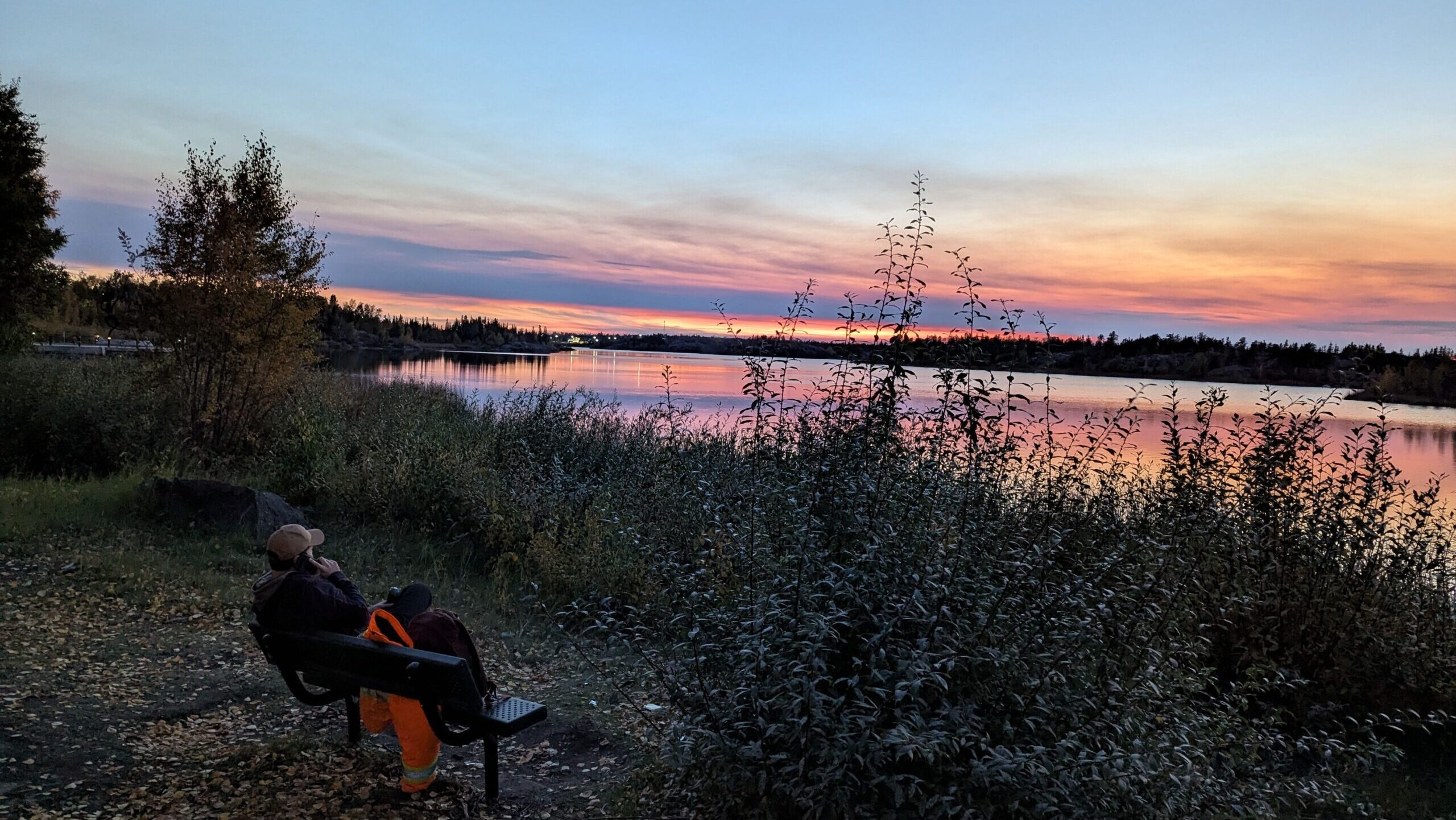
The organization is working with area leadership to build a monument close by the lakeshore in Yellowknife, to honour Survivors and all children who were forced to attend residential schools in the territory, between 1867 to the 1990s.
“We’re on track in terms of getting the monument built,” Bob Overvold, a co-founder of the group, told True North FM.
“TRC calls to action 82 calls upon the Territorial government in collaboration with Survivors and their organizations, to build a monument to honour Survivors and those who were lost at residential school. We insist on being a vital part of that process,” affirmed Doreen Cleary, who is a co-chair of the organization.
This is the first of the Calls to Action the newly formed Survivor Circle, We Always Remember (WAR) are on the road towards fulfilling.
The Survivor Circle wants to source the work on the monument to an artist and is working jointly with the GNWT to decide the type of monument to build.
Two members of the circle would have power to give approval and final instructions to whoever gets the job to build a monument, explained Overvold.
Currently, the group is in the process of finding artists including artist carvers to create the monument, said Overvold.
The group hopes to have the monument ready within the next two years and are hoping some construction can start by next summer. They are not at the point yet where they have decided what will be built or how, but they will likely have plans ready by winter, Overvold said.
“The GNWT has approached the city with help from us to get a spot where the monument could be built there. They’re working on getting a land transfer from the city to the GNWT and that that’s where the monument will be,” he explained.
“Where we are on it is, we’ve gone public, asked for expressions of interest,” he added.
“We wanted some sort of forestry being part of it and we wanted a view of open water. So there’s a big lake right behind this city hall there. Those two objectives are met with this site that we’ve agreed to.”
Having those elements was important to the Survivors because of their experiences.
Survivors, including Paul Andrew, Doreen Cleary and Overvold are among the original organizers of WAR. Survivors including many from Fort Good Hope, who went to the Aklavik Residential school in the 40s and 50s, had talked with Overvold about what they missed after they were forced to leave their homes.
“Before they went to residential school, they were essentially brought up in the bush and a lot of time on rivers and lakes. And so, they talked about that’s what they missed the most when they were in residential school, they missed not being on the land anymore,” explained Overvold.
“One woman who I know quite well, 85 years old, the one who went there when she was 4 years old and stayed there for seven years told me: ‘I can remember. When I left and I knew my language. And, I knew a little bit about bush life, even though I was only 4, because with my parents, we lived in the bush most of the time – trapping hunting and then the fish camps during the summer along the MacKenzie River, but when I came back, seven years later, I didn’t know my language. I knew very little about my culture in the bush and I had to learn it all over again. So, that’s what it took away from me,’ she said, going to residential school.”
The lands of the territory hold deep roots to Indigenous ways of knowing and being, for language, culture and community, explained Overvold. He spent three years in a residential school in Aklavik, beginning from the time he was 8 years old.
“At the end of June, I was up in Aklavik, in the McKenzie Delta and most of the students were from there. And every summer their boats would bring them back to the home communities, but because I was from the Sahtu, there was no way for them to ship me home. So, I studied year around for three years there in Aklavik, and one of the most hurtful things was seeing all these students who I got to know in Aklavik residential school being so happy that they’re heading home for the summer and I couldn’t go home, but I never spoke to anyone about what that experience was like, and what happened to me there and how it affected me there.”
Since forming the Circle with fellow Survivors, he has gradually spoken a bit more about the residential school experience, to find he is not alone.
“Then a month ago when I was in Fort Good Hope I got the same feedback from Elders, who are now are in their mid 80s and early 90s and said, you know, Bob, I haven’t talked to anyone about this in over 50 years.”
Another colleague, of Overvold, now in his 70s had two older sisters and when they were children, they were sent away to residential school in Fort Providence.
“They never came home and to this day. He and his family members, he’s got two brothers, two parents who have passed on, but they never were able to find out why their two sisters never came home. They don’t know if they were adopted, sent south and were adopted or what, they just never knew. And there’s a lot of people who talk about that, they have relatives who went to residential school – never came home. Some of them died there but others we don’t know. Might have been sent south to be adopted, who knows? So that’s the type of stuff we’re working on trying to find out.”
A crisis line is available for Survivors, Intergenerational Survivors and those affected by residential schools 24-hours a day, seven days a week at 1-866-925-4419. A counselling and crisis support is helpline is available 24 hours a day, seven days a week at 1-855-242-3310 or at www.hopeforwellness.ca.