
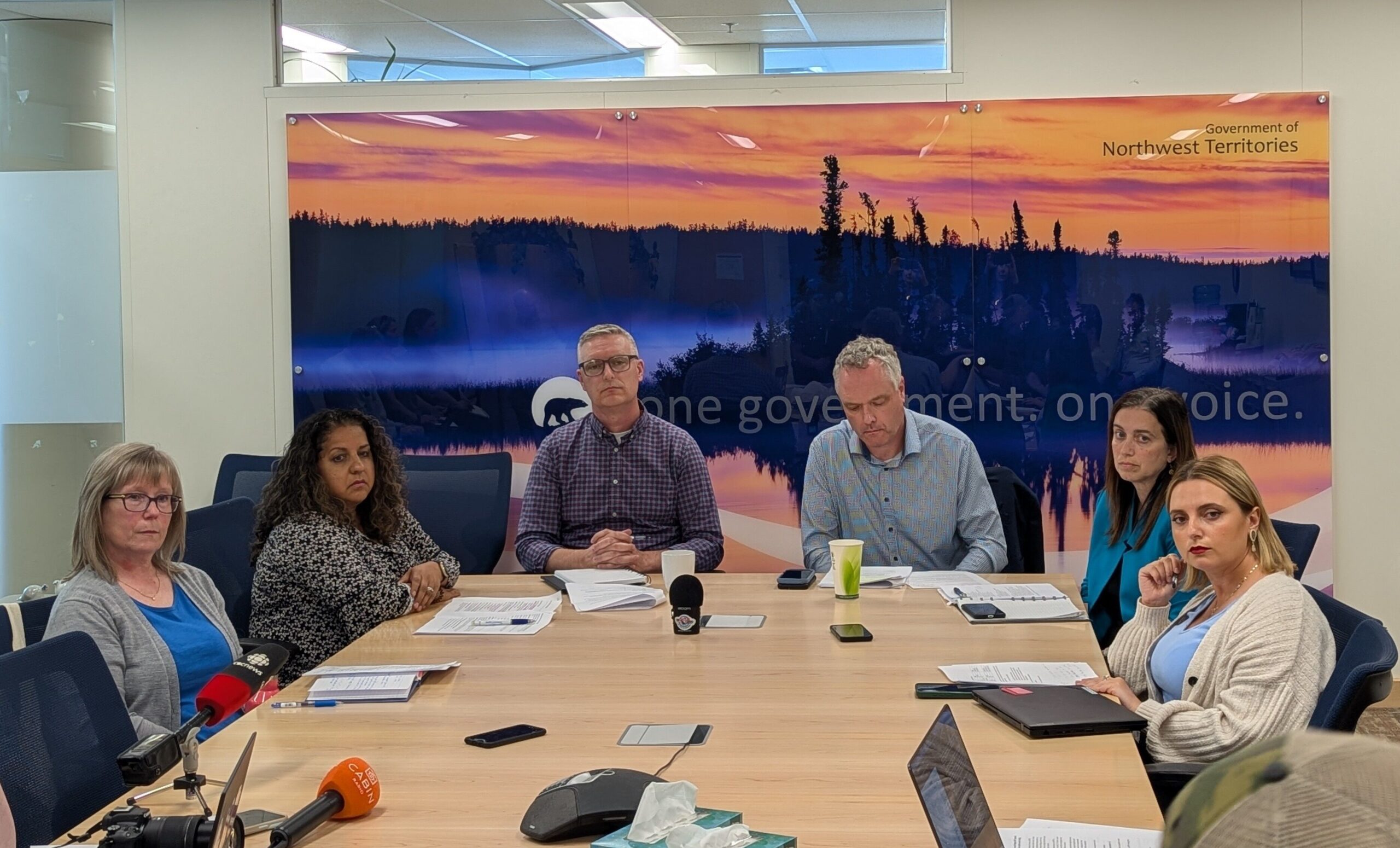

The GNWT just announced today that school administration will implement new measures at École William McDonald Middle School and Range Lake North School to improve drinking water safety to address concerns about lead.
Findings of elevated lead levels in two Yellowknife area schools were first made public in May. According to the statement released today by GNWT, the source of lead in these schools has not been confirmed. Officials said precautionary steps will be taken to remove potential sources of lead to ensure students and staff have safe drinking water.
Both schools will continue to use bottled or alternate water “temporarily” for drinking and cooking at both schools. Officials said that “drinking water will only return to service” after all safety measures are implemented, follow-up testing demonstrates it is safe for consumption, and the Office of the Chief Public Health Officer finds it is safe to lift the do-not-consume orders.
At École William McDonald Middle and Range Lake North, new measures include replacing all drinking water fixtures and fountains. Officials have decided that for the time being, pipe replacement is not considered necessary. They said follow-up and ongoing testing will be used to determine water safety “before and after” drinking water service resumes.
At École William McDonald, point-of-use activated carbon filters will be installed at every drinking water and food preparation fixture. Officials said the filters are designed to remove lead from any source, which will make the water safe to drink. Water will be examined regularly to test its general quality and to confirm the effectiveness of carbon filters that will be installed, said officials.
At Range Lake North School, GNWT officials said they plan to install an automated flushing system to prevent water from sitting in pipes long enough to accumulate elevated lead levels.
They said water will be tested to confirm the flushing system’s effectiveness and overall water quality. “The flushing system will be programmed for regular operation, maintained to ensure it continues to prevent lead from building up in the water supply, and tested regularly to ensure continued safety,” said representatives in a statement issued today.
GNWT is also preparing a “priority testing approach” for all N.W.T. schools, which will be guided by national best practices and guidance from the Office of the Chief Public Health Officer. GNWT’s announcement outlined the ways the testing will prioritize schools on factors such as:
- Age of the school
- Existing water quality data
- Age of the student population
- Results from initial random sampling
The testing protocol will also be finalized and reviewed by the Office of the Chief Public Health Officer.
The statement also explained that current and former staff of both schools can submit a Worker’s Report of Injury to the Workers’ Safety and Compensation Commission if they have concerns about workplace lead exposure.
GNWT officials responded to True North’s request for more information.
Related Links listed in the statement:
- Stantec report: Range Lake School
- Stantec report: William MacDonald School
- Report: Investigation into the Testing Program for Drinking Water in Northwest Territories Schools
- WSCC Worker’s Report of Injury Form
- Monitoring and Testing of Water in the NWT
- Public Service Announcement on lead water in Yellowknife Schools:
- July 14 Update on Lead Testing in NWT Schools: GNWT taking interdepartmental approach to address water testing issues in Yellowknife schools | Government of Northwest Territories
- June 25 Follow-Up Lead Testing Results at Yellowknife Schools | Government of Northwest Territories
- May 31Update on Lead Testing in NWT Schools | Government of Northwest Territories